Director, Program Management Office
Jennifer Howe
I find the need or the gap, then build the teams and processes to fill it.
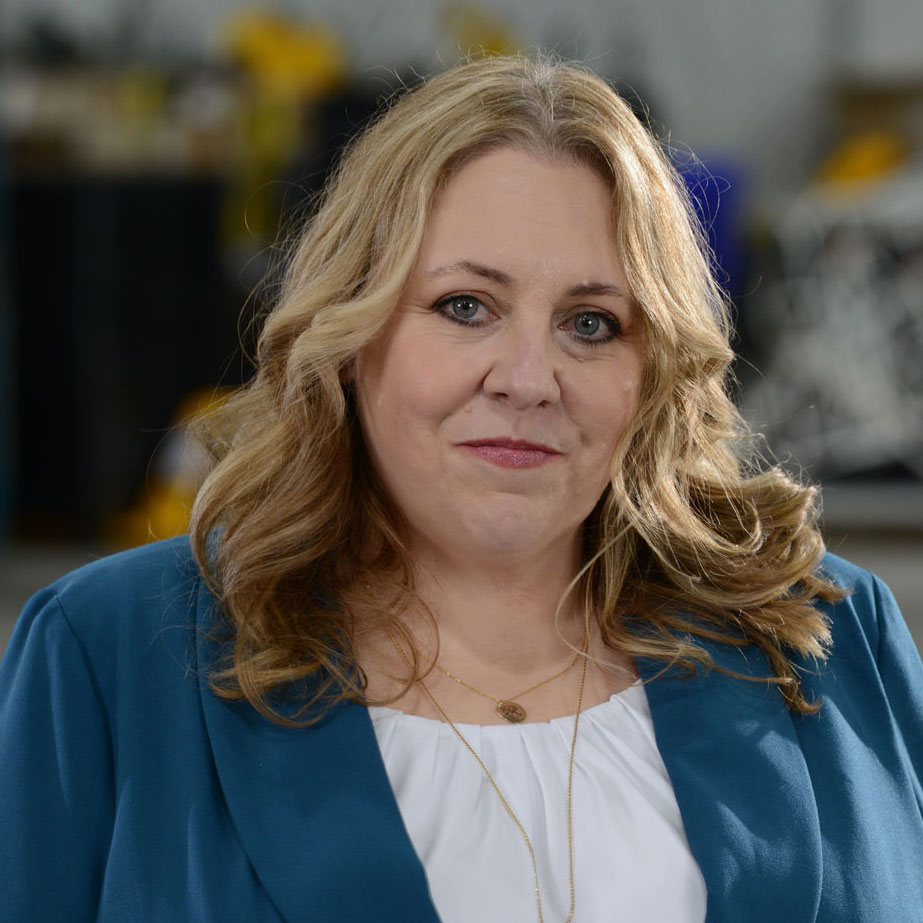
I find the need or the gap, then build the teams and processes to fill it.
Most of what I'm proud of started as a gap. There was important work with no home, so I built the team and the process to run it. I've done that twice at Ascent Global Logistics: first by starting a real Product Management practice, then by building the company's first IT Program Management Office. Before the PMO there was no intake, no governance, and no shared way of working. The standards my team wrote are now how major initiatives get requested, governed, and delivered across the company.
I do my best work where the process doesn't exist yet, or where the one that does is chaos and someone has to build the system that makes the work repeatable.
The product practice came first. Ascent had never had formal product management, so I built it, growing the team from one person into a cross-functional group and trading ad-hoc requests for roadmaps tied to real outcomes. I worked with the CTO, engineering, and marketing to take several products from idea to market. When the organization later needed that same discipline across all of IT, I already knew the pattern.
The PMO is where that work grew up. I brought Program, Product, Business Analysis, QA, and Scrum onto one team and gave IT a single place to ask for work. More than a hundred requests came through in the first four months. The governance model, gate reviews, and risk policy I wrote turned scattered, ad-hoc delivery into a steady, predictable cadence.
Lately the gap is AI. I created and now chair Ascent's AI Governance Council, and I'm building the approach that lets the company adopt AI without slowing down the people who are ready to use it or exposing the business to risk.
Programs that reshape how the business operates, not one-off projects. Each sits inside the $10M+ portfolio I govern in partnership with the CTO and CFO.
Multi-year program collapsing six legacy TMS platforms into a single scalable system while the business continues to run on them. Executive accountable for delivery, methodology, and benefits realization across the program lifecycle.
Multi-team initiative pulling together IT, operations, and commercial requirements as the company moves into Europe. The breadth requires partnership across organizational silos and steering across functions that don't naturally talk to each other.
Built Ascent's first centralized PMO. One team bringing Program, Product, UX, Business Analysis, QA, and Scrum under a single accountability structure, working together across the full delivery lifecycle: discovery, requirements, design, build, test, and release.
Built the program roadmap for a new platform that serves as the single visibility layer for shipment tracking, event management, and exception handling across all TMS solutions. For the first time, the business has one clear view of supply chain operations.
How much could a non-engineer running a PMO actually do with AI augmentation? That's what I started experimenting with over the last few months. The Production Flow Dashboard is what came out of it.
I picked a pain point in my team's work. We were constantly being asked where the risks sat in the teams' workflow, where the blockers were, and how we were tracking on capacity, dwell time, and cycle time. We had Jira across all teams so the data was there. The gap was pulling a quick view that let team leads and IT leadership actually see what was happening.
So I asked Claude Code if I could build something to solve it. Together we built an internal delivery visibility platform that ingests Jira and GitHub data and gives every team a live view of where work is moving and where it's stuck. It started as a personal proof of concept, then went into production with our infrastructure team.
What started as a proof of concept ended up replacing about a day a week of manual status assembly across the IT org.
When I showed it to our CEO, he asked for an executive-level view. That became the portfolio rollup that now gives leadership a single coherent picture of what's shipping.
The Dashboard is also the starting point for something bigger I'm designing now: an AI-driven product delivery model that rethinks how traditional software development roles work. As the shape of the work changes, the Dashboard is what keeps a clear, accurate view of velocity, quality, and risk.
Alongside the tooling, I created and chair Ascent's AI Governance Council, the group that sets policy, approves tools, and keeps adoption safe. It lets teams move quickly on AI without leaving the company exposed.
Built Ascent's first IT PMO from the ground up. There was no intake, no governance, and no shared standards before it. I brought Program, Product, Business Analysis, QA/UAT, and Scrum onto one team and opened a single front door for IT work, which took more than 100 requests in its first four months. The governance model, gate reviews, and risk policy I wrote are now the company standard. I govern a $10M+ portfolio within a $30M IT budget and chair a steering committee of executives from Finance, Operations, Marketing, IT, Legal, and HR.
Brought formal product management to Ascent for the first time, trading ad-hoc requests for roadmaps tied to real outcomes and growing the practice from one person into a cross-functional team. Worked with the CTO, engineering, and marketing to take several products from concept to market.
Started the company's first UI/UX practice, the first of the functions I would go on to build from scratch.
Led brand and visual design across print, digital, and product, and rebuilt the company website around customer research. It was early groundwork for the product thinking that came later.
Nearly sixteen years building programs from the ground up, including community outreach initiatives, an internship program, and the organization's IT systems. I ran its first full technology procurement, from RFP through implementation of a new statistics database, and wrote the grant applications that funded much of the work.
Starting new practices where none existed: Product, then the PMO, then AI governance. Each one with the team, the operating model, and the standards to make it last.
Governing a $10M+ portfolio inside a $30M IT budget: intake, prioritization, capital allocation, gate reviews, and benefits realization, in partnership with the executive leadership team.
Replacing scattered, ad-hoc delivery with a system people can rely on: one front door, quality gates, risk and dependency tracking, and a steady cadence that keeps sponsors aligned.
Chairing the AI Governance Council and building the model that lets the whole organization adopt AI safely, not just the engineering teams.
Led the board through governance, fundraising, and strategic planning (2014–2019), and kicked off an $8M capital project to build a new facility.
Since 2014, I've built and maintained the organization's website and managed its donor database, helping the staff get the most from their tools.
Logistics tech, building teams, the messy reality of large-scale program delivery. Always happy to connect.